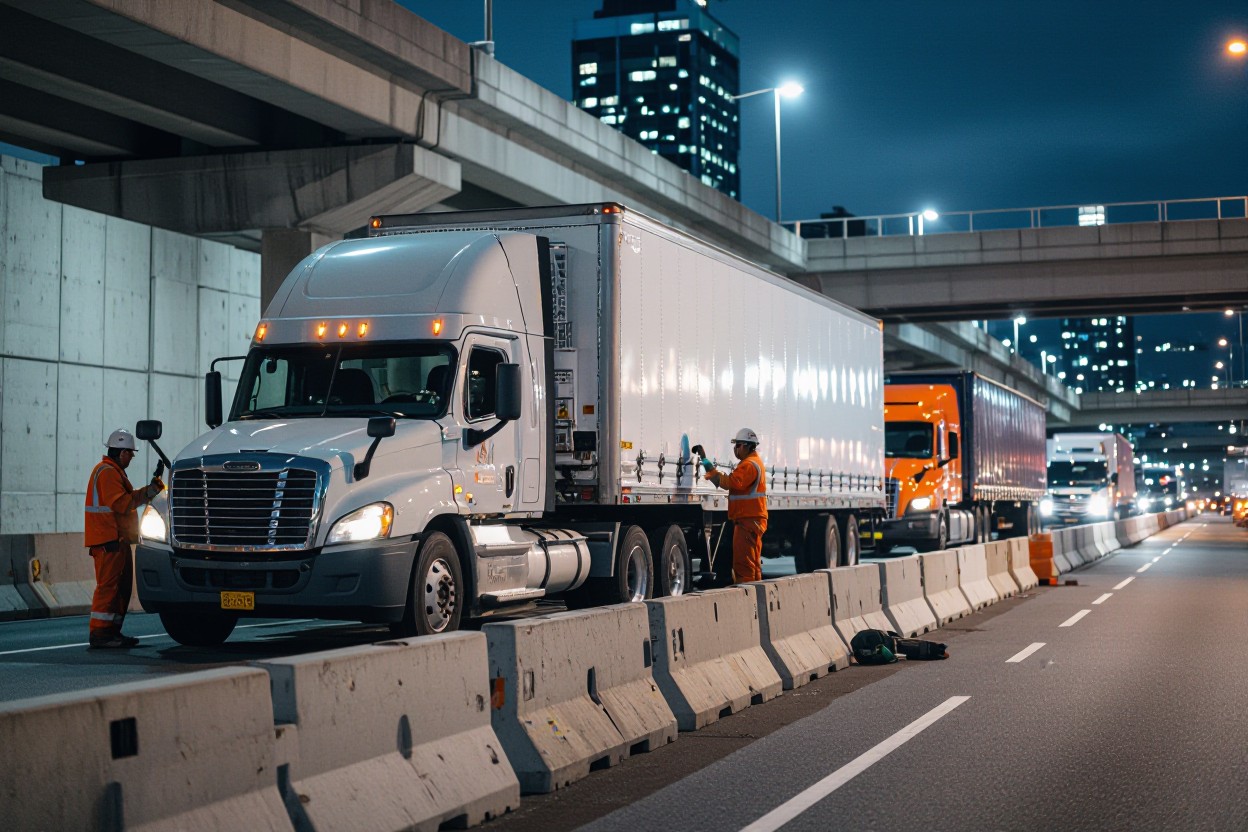
There’s a significant demand for efficient curtainside repairs along Auckland’s Southern Motorway, especially between Penrose and Drury, where freight traffic is heavy. If you operate in this area, having access to full mobile repair services means you can address issues like strap rewiring, sliding mechanism repairs, and structural patching without interrupting your schedule. Mobile crews can reach you quickly at major depots and freight hubs, helping reduce downtime and keeping your operations running smoothly across key suburban freight zones.
Key Takeaways:
- SH1 and the Southern Motorway form a vital freight corridor supporting high volumes of commercial transport.
- Mobile repair teams provide comprehensive services including strap rewiring, sliding mechanism fixes, and structural patching directly on-site.
- Areas such as Penrose, Ōtāhuhu, Takanini, and Drury experience heavy freight traffic, making them key locations for mobile repair operations.
- Quick access to major depots and transport hubs enables repair crews to respond efficiently along the route.
- Utilizing mobile repair services helps alleviate workload at central workshops and minimizes downtime for freight operators through flexible scheduling.
The Art of On-Site Repairs: Transforming Curtainside Maintenance
Your fleet encounters daily wear that demands swift, precise fixes without interrupting freight schedules. Delivering on-site curtainside repairs means you get expert attention right where your vehicles run, from Penrose’s depots to Drury’s logistics hubs. Mobile crews handle complex strap rewiring and sliding mechanism overhauls effectively, minimizing downtime and maintaining load security on Auckland’s busiest freight routes. This hands-on approach adapts to your operational rhythm, preserving vehicle integrity while you stay on the move along SH1 and the Southern Motorway.
Innovative Strap Rewiring Techniques
Advanced strap rewiring involves using reinforced polyester webbing combined with corrosion-resistant buckles and tensioners tailored for heavy freight use. Your repair team can replace damaged straps by integrating quick-release mechanisms that speed up future adjustments, saving up to 30% in maintenance time. This method supports consistent load restraint, even on the jarring surfaces along Auckland’s Southern Motorway, helping prevent freight shifts and damage during transit.
Sliding Mechanism Overhaul: Best Practices
Restoring sliding rails and rollers requires dismantling worn components, followed by precision alignment to reduce friction and improve curtain mobility. Lubricants with high resistance to dust and moisture extend part lifespan, particularly vital for vehicles frequenting Penrose and Ōtāhuhu depots where grime accumulates rapidly. You’ll notice smoother curtain operation, decreased wear, and a lowered risk of mid-route failures when following these steps.
Expanding on sliding mechanism overhaul, your repair crew begins with a detailed inspection to pinpoint damaged rollers, bent tracks, or misaligned guides. Replacement parts are sourced to exact OEM specifications, ensuring seamless integration. Fine-tuning includes adjusting tension springs and retesting curtain movement dozens of times, sometimes under simulated load conditions. This process can reduce future callouts by up to 40%, a considerable saving on both time and repair costs, especially across busy Southern Motorway routes where reliability is non-negotiable.

Key Freight Hubs: The Heart of Auckland’s Distribution Network
The stretch from Penrose to Drury serves as the backbone for Auckland’s freight movement, with several major hubs dotted along the corridor. These locations support vast logistics operations, enabling swift transfer and storage of goods. Access to SH1 and the Southern Motorway ensures freight travels efficiently between ports, warehouses, and retail distribution centres. Understanding these hubs helps you better plan maintenance schedules, positioning mobile repair crews close to where your vehicles spend most of their time.
Penrose: The Industrial Powerhouse
Penrose anchors Auckland’s freight landscape with its dense concentration of warehouses and container depots. Hosting over 200 industrial businesses, it’s home to large-scale distribution centres for companies like Mainfreight and Owens Group. The area’s proximity to both the port and motorway makes it a frequent stop for curtainside trucks, meaning your mobile maintenance team can rapidly respond to repairs without disrupting tight delivery windows.
Ōtāhuhu, Takanini, and Drury: Emerging Freight Hotspots
Growing industrial estates in Ōtāhuhu, Takanini, and Drury have expanded freight activity beyond Penrose, thanks to rising warehousing demand and improved motorway access. New distribution centres, such as Foodstuffs’ Ōtāhuhu hub and Takanini’s logistics parks, increase vehicle traffic along this corridor, highlighting these suburbs as imperative points for timely mobile repairs and fleet support.
Ōtāhuhu’s ongoing expansion includes multimodal freight facilities connecting road, rail, and port operations, positioning it as a critical interchange. In Takanini, recent developments feature large-scale cold storage and e-commerce hubs that rely on curtainside trucks for rapid stock turnover. Meanwhile, Drury’s industrial zone is benefiting from infrastructure upgrades tied to motorway extensions, attracting major national carriers. These evolving freight hotspots demand flexible repair solutions to keep vehicles moving without causing costly delays.
Logistics Unlocked: Strategic Access for Repair Crews
Your repair crews move seamlessly along the Southern Motorway corridor by accessing key freight depots across Penrose, Ōtāhuhu, Takanini, and Drury. These strategic points serve as both service hubs and staging areas, allowing teams to deploy quickly and efficiently. By positioning crews close to high-traffic freight nodes, you avoid delays usually caused by navigating congested urban routes, ensuring timely repairs when your vehicles need them most.
Navigating Major Depots: Efficiency in Motion
Operating from major depots like Freightways in Penrose and Ports of Auckland’s Ōtāhuhu facility, your repair teams capitalize on direct depot access to perform on-the-spot fixes. This proximity slashes downtime by eliminating lengthy trips back to centralized workshops. Coordinated schedules with depot managers help your crews hit peak operational hours, keeping freight moving smoothly across the Southern Motorway network.
Collaborating with Transport Hubs for Seamless Service
Close collaboration with transport hubs such as the Takanini Logistics Park and Drury freight yards expands your repair reach without disrupting loading and unloading cycles. Integrating your services within hub operations means your crews can act swiftly during scheduled breaks or low-peak periods, minimizing interruptions and maintaining steady freight flow.
Partnering directly with transport hubs grants your repair teams privileged access to areas typically restricted to external contractors. This access allows immediate response to wear and damage detected during loading activities, often before vehicles even leave the yard. For example, the Takanini Logistics Park coordination includes real-time communication links with scheduling managers, enabling repairs during short layovers. Such integration reduces the need for lengthy equipment checks at external workshops and keeps your fleet’s turnaround time remarkably low, which proves vital for businesses relying on tight delivery windows along the SH1 freight artery.
Decentralized Solutions: Why Mobile Repairs are Game-Changers
Mobile curtainside repairs transform maintenance along Auckland’s Southern Motorway by bringing expertise directly to freight-heavy zones like Penrose and Drury. Instead of rerouting vehicles to central workshops miles away, repair crews fix strap rewiring or sliding mechanisms onsite, minimizing delays. This decentralization not only keeps freight moving smoothly but also adapts to your schedule and location, reducing downtime while maintaining structural integrity. The flexibility gained here redefines how you manage curtain-side repairs across this vital transport corridor.
Alleviating the Burden on Central Workshops
Direct mobile servicing means fewer vehicles clogging central workshops, freeing those facilities to focus on more complex repairs or fleet-wide inspections. You avoid bottlenecks caused by workshop overload in busy freight hubs like Ōtāhuhu or Takanini, preventing maintenance backlogs. This strategic distribution of repair tasks prevents your fleet from being sidelined and balances demand across the network, enhancing overall operational stability.
Boosting Turnaround Times and Operational Efficiency
Repair crews arriving onsite slash your vehicle downtime by handling tasks like structural patching or sliding mechanism fixes without routing curtain-side vehicles off-route. Often, repairs that would normally take days in a workshop are completed within hours alongside your distribution hubs, keeping your freight moving on schedule. This rapid response increases fleet availability and cuts unexpected delays significantly.
Faster turnaround times directly translate into improved scheduling and reduced revenue losses. For example, one transport operator servicing the Drury area reported that mobile repairs decreased their average vehicle downtime by 40%, enabling a quicker return to service and better allocation of driver routes. Coupled with streamlined access to depots and freight terminals, mobile repairs enhance efficiency by synchronizing maintenance with your logistical flow rather than disrupting it.
To wrap up
On the whole, choosing mobile curtainside repairs from Penrose to Drury along Auckland’s Southern Freight Artery allows you to keep your vehicles moving with minimal downtime. By accessing your site directly, the repair crew handles rewiring, sliding mechanisms, and structural issues efficiently, reducing the strain on central workshops. This flexible service ensures you maintain operational flow across key freight suburbs while benefiting from quick, professional support tailored to your schedule. Your transport operations stay on track without unnecessary delays or disruptions.
FAQ
Q: What types of mobile repair services are available along the SH1 and Southern Motorway freight route?
A: Mobile repair services offered include strap rewiring, sliding mechanism repair, and structural patching. These services are designed to address common issues with curtainside trailers directly on-site, ensuring minimal downtime for freight vehicles operating between Penrose and Drury.
Q: Which suburbs along the Southern Motorway are frequently serviced for curtainside repairs?
A: The main suburbs serviced include Penrose, Ōtāhuhu, Takanini, and Drury. These areas experience high volumes of freight activity, making mobile repair services especially beneficial to maintain smooth transport operations without the need to return vehicles to central workshops.
Q: How do repair crews access major depots and transport hubs for mobile service calls?
A: Repair crews are equipped with mobile units and have direct access to the key freight depots and transport hubs located along the SH1 and Southern Motorway. Their strategic positioning allows them to respond quickly and efficiently to repair requests in heavy freight suburbs.
Q: In what way do mobile curtain side repairs alleviate the load on centralized workshops?
A: Mobile repairs reduce the need for freight vehicles to be taken off-route and sent back to workshops, which can cause delays and increased downtime. By providing on-site maintenance and repair services, mobile crews help keep vehicles operational and minimize congestion at fixed repair facilities.
Q: How can freight operators book mobile curtain side repair visits to minimize operational disruption?
A: Operators can schedule flexible mobile repair appointments that align with their delivery and transport schedules. This ensures repairs are conducted at convenient times and locations, allowing freight vehicles to return to service quickly without significant interruptions to their routes.
Leave a Reply